
Roofing
Homeowners researching **roof replacement, cost, lifespan, and materials**

How much does a roof replacement cost in Sacramento?
Roof replacement in Sacramento typically costs between $12,000 and $25,000,
depending on roof size, materials used, tear-off requirements, and labor costs.
How long do asphalt shingle roofs last?
Asphalt shingle roofs usually last 20–30 years in Sacramento’s climate when
properly installed and maintained.
What roofing material is best for Sacramento homes?
Asphalt shingles are most popular due to affordability, durability, and heat
resistance for hot summers.
When should a roof be replaced instead of repaired?
Replacement is recommended for widespread damage, recurring leaks, sagging,
or when the roof reaches end of lifespan.
Plumbing
Emergency + preventative plumbing education

How much does a plumber cost in Sacramento?
Plumbing services in Sacramento typically range from $150 to $500 for common
repairs, with emergency or complex jobs costing more.
What are common plumbing problems?
Clogged drains, leaking pipes, water heater issues, and old sewer lines.
When should I replace my water heater?
Usually after 8–12 years or if rust, leaks, or uneven heating occurs.
HAVC
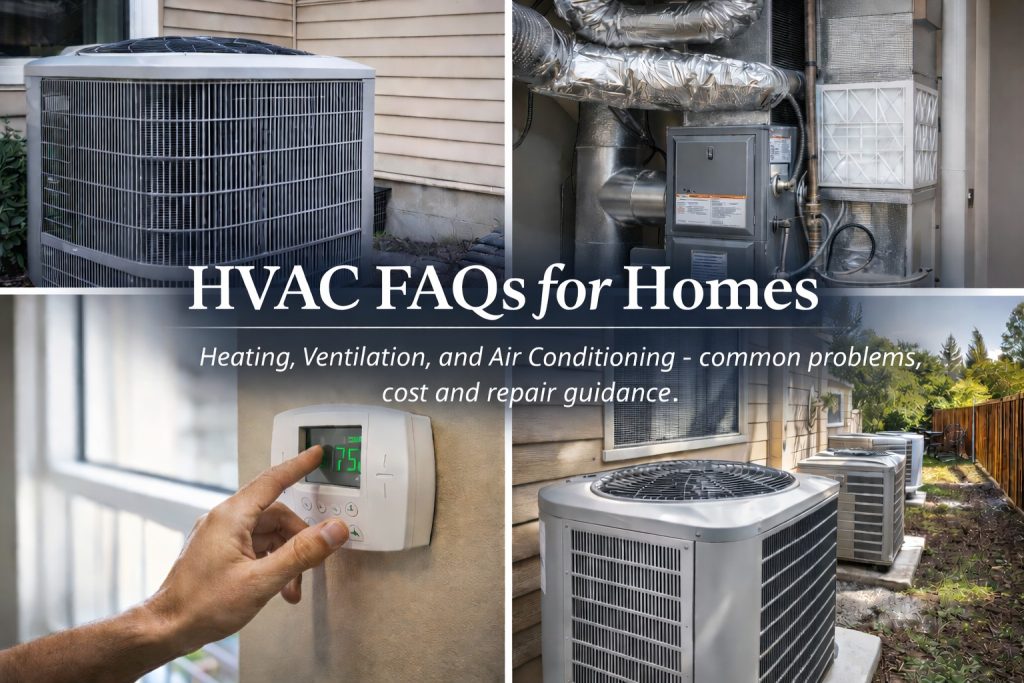
3. HVAC ▼
Efficiency, cost, lifespan, and replacement timing
How much does HVAC replacement cost in Sacramento?
HVAC system replacement in Sacramento typically costs between $8,000 and $18,000
depending on system size, efficiency rating, ductwork, and installation complexity.
How long do HVAC systems last?
Most HVAC systems last 15 to 20 years when properly maintained, though extreme
summer heat can shorten lifespan without regular servicing.
What size HVAC system do I need for my home?
The correct HVAC system size depends on home square footage, insulation, window
efficiency, and local climate, and should be determined by a professional load calculation.
How can I improve HVAC efficiency in hot Sacramento summers?
Improving HVAC efficiency includes regular maintenance, upgrading insulation,
sealing ducts, using programmable thermostats, and choosing high-SEER systems.